

1.4. History of Microcontrollers#
Microcontrollers have advanced from simple 4-bit devices used in calculators and toys to 32-bit devices capable of monitoring multiple sensors, powering high resolution displays and communicating overt Wi-Fi.
1.4.1. Early Days#
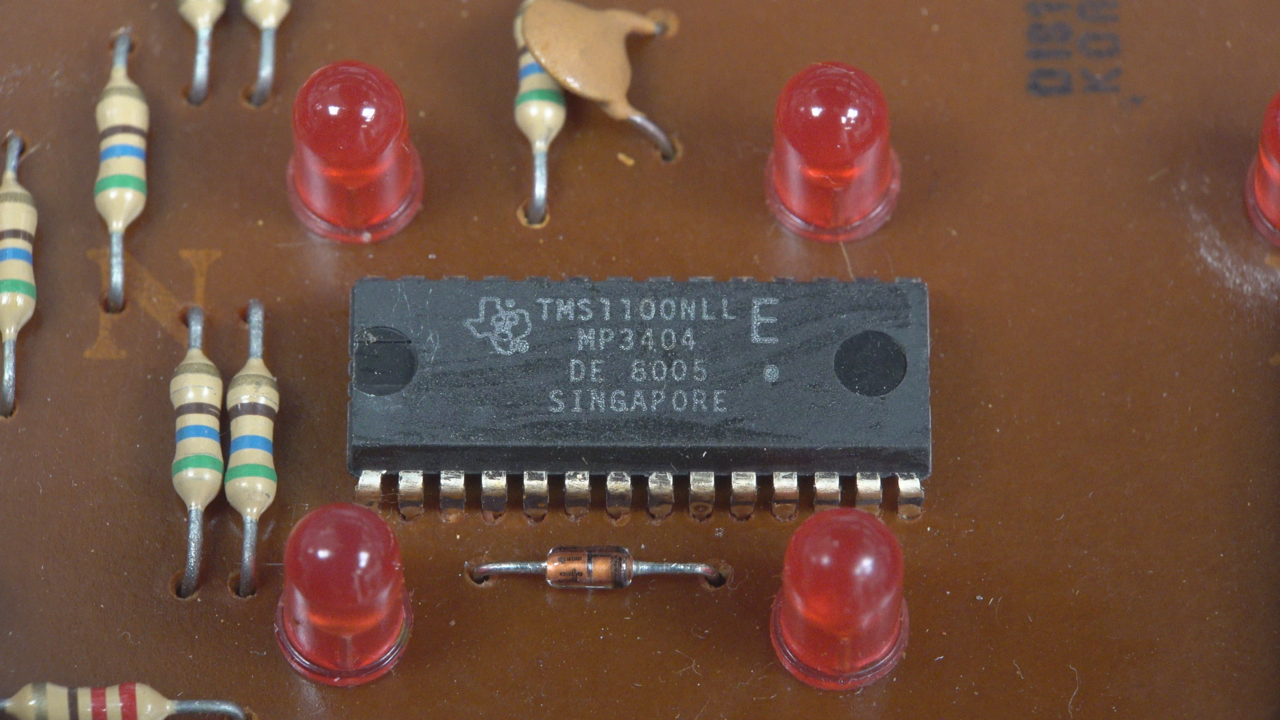
TMS1100 by Binarysequence - Own work, CC BY-SA 4.0#
In 1974 Texas Instruments introduced the TMS1000 family of microcontrollers which had a 4-bit microprocessor, ROM, RAM and GPIOs. It was one of the first mass produced and general purpose microcontrollers and revolutionised electronics. The famous “Speak & Spell” toy used a TMS1000 microprocessor and a TMC0280 voice synthesiser IC.
.jpg)
Speak & Spell by FozzTexx CC BY-SA 4.0#
This was quickly followed in the late 70s by Intel and Motorola developing 8-bit microcontrollers with improved performance, expanded RAM and GPIO pins. These 8 bit MCUs quickly found applications in the automotive industry as some of the first digital trip computers and were even used as the basis for some of the first personal computers such as the Altair 8800.
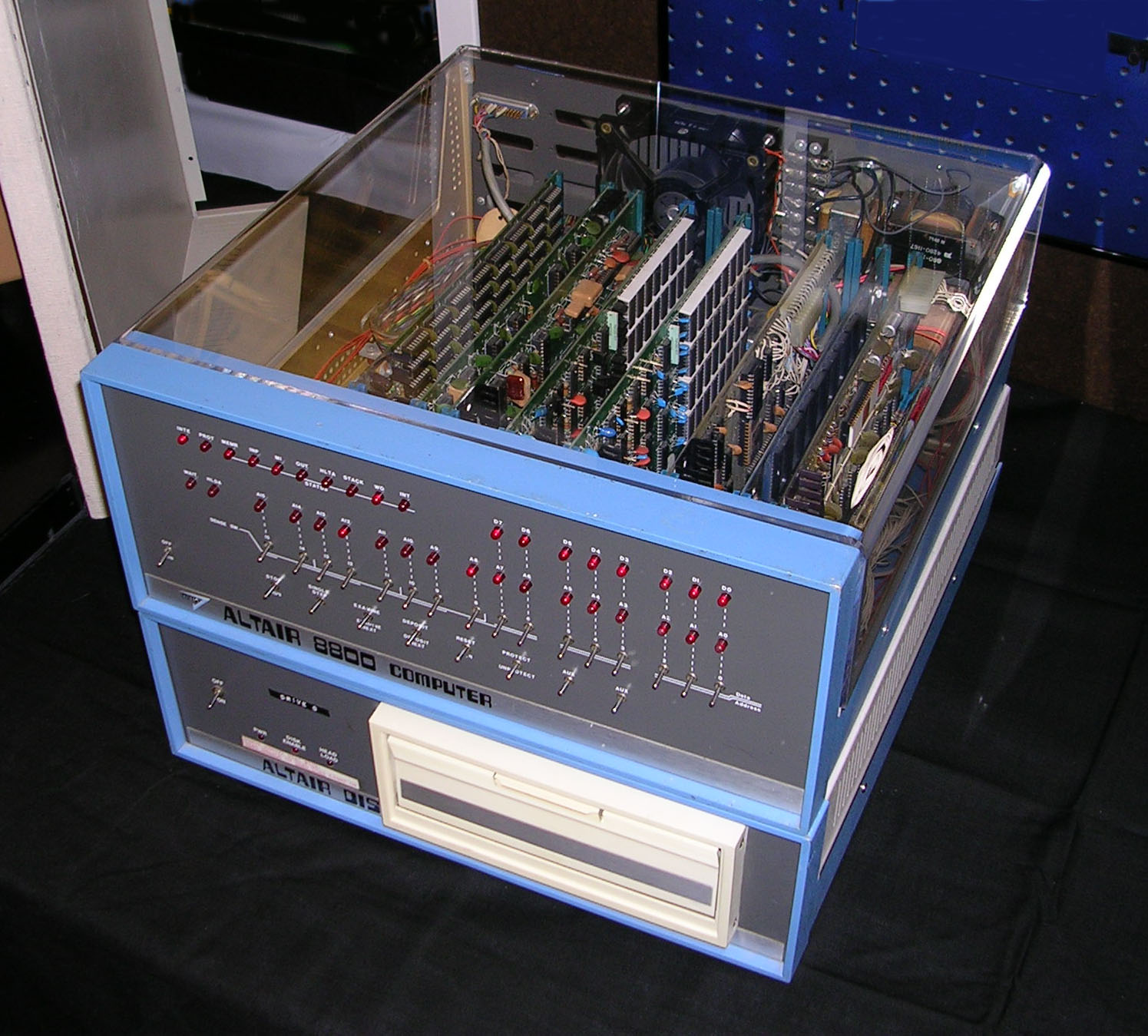
Altair 8800 by Swtpc6800 Public Domain#
1.4.2. Maker Era#
In 1993 Microchip Technology introduced the PIC16C84, which included electrically erasable program memory (EEPROM) at a low cost. Developers were able to re-program the device many times slashing development effort and cost, while at the same time the MCU was affordable enough to be included in low cost products and for hobbyist use.
Atmel continued this trend by replacing the EEPROM with flash memory in the mid 90s with their AVR line of microcontrollers. Later on, AVR microcontrollers became the basis for products such as Arduino.
1.4.3. Maturation#
In the early 2000s there was a step change with 32-bit microcontrollers and more advanced instruction sets such as ARM. Notably ARM itself licensed the design of its microprocessor core, which let other semiconductor manufacturers create their own versions of microcontrollers with minimum effort and existing microcontrollers could be upgraded by dropping in a new microprocessor design.
As demand for internet connected devices grew in the 2000s there was a rush to develop microcontrollers with Wi-Fi capabilities. The Espressif “ESP” line of MCUs is one of the most widely used examples and is commonly found in household “Internet of Things” (IoT) devices such as smart light switches, bulbs, smart appliances and even wearable devices like fitness trackers.