1.2. Supervised vs Unsupervised Learning#
Machine Learning (ML) algorithms rely on data to learn. Supervised learning is when the computer learns from labelled data and unsupervised learning is when the computer learns from data that does not have labels.
1.2.1. Supervised Learning#
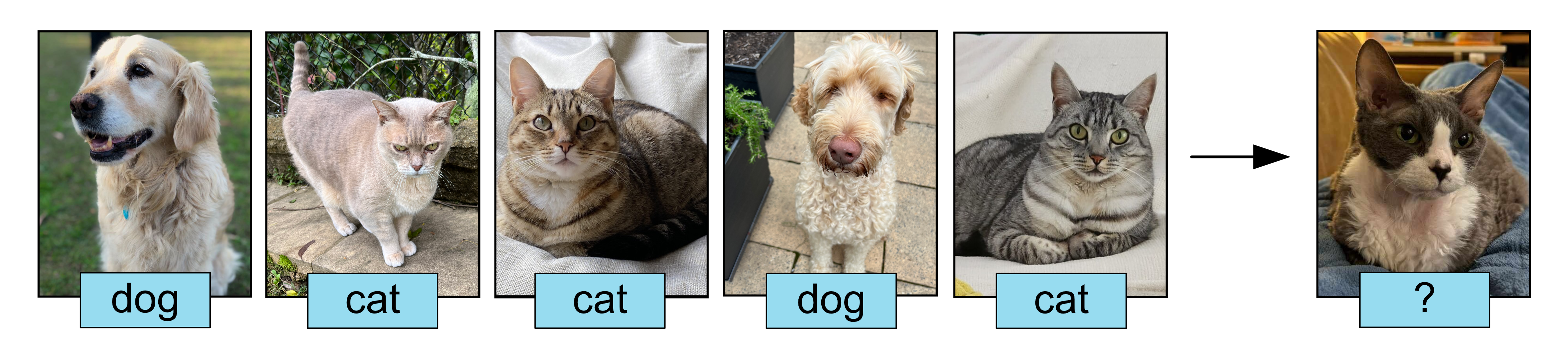
Classification is an example of supervised learning. In classification the goal is to predict a class or category. For example, trying to distinguish between pictures of cats and dogs. The data is labels would say ‘cat’ or ‘dog’. The computer has access to this information as it learns to classify images of cats and dogs.
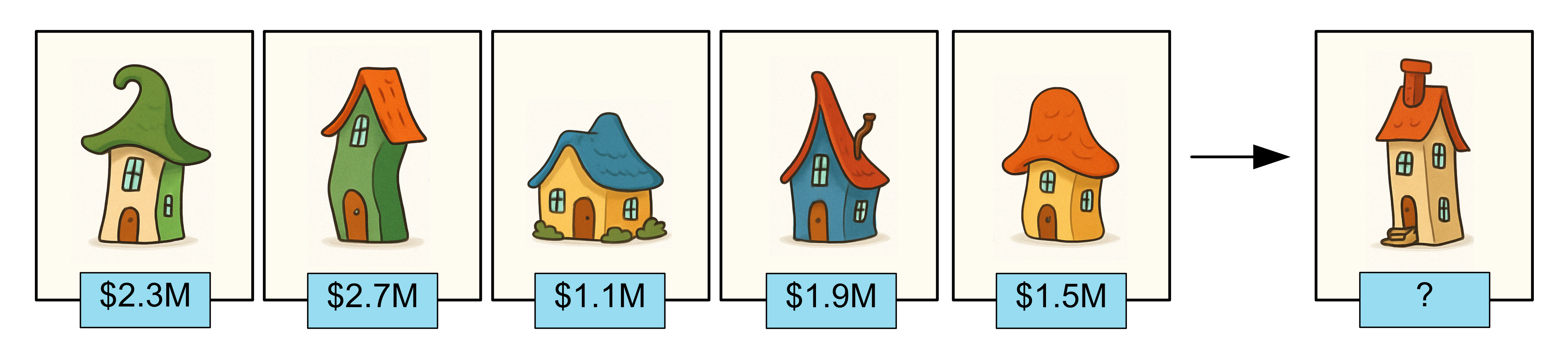
Regression is another example of supervised learning. In regression, the goal is to predict a number. For example, trying to predict the the price of a house. The data will contain lots of examples of houses and the goal would be to try to predict the price of new house.
Most of the algorithms we’ll be looking at are forms of supervised learning.
1.2.2. Unsupervised Learning#
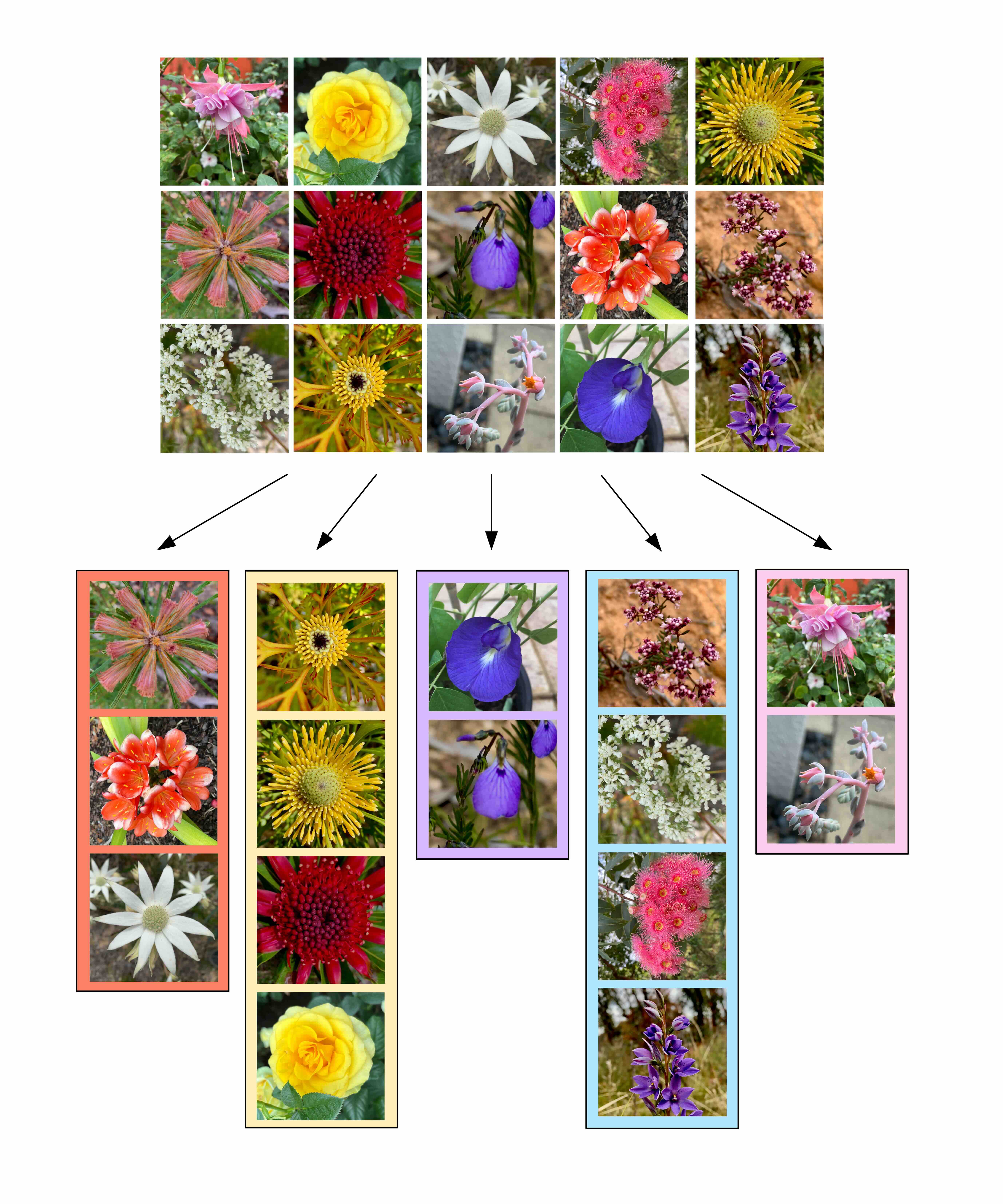
Clustering is an example of unsupervised learning where the computer aims to find natural groups based on different characteristics. For example, a horticulturist may want to group flowers by appearance, or a marketing company may group customers by different characteristics. A common goal of unsupervised learning is to find patterns in the data, which means that there isn’t necessarily a right or wrong answer.