

Super#
So far we’ve been repeating a lot of the parent class constructor in the child class. Let’s learn how to fix it!
super()#
The super() function in Python is used to access methods in a parent class
from a child class. This is useful when you override a method from the parent
class or want access to the original functionality.
The way super() works is by creating a version of the current instance with
only the methods of the parent class.
Example
In the example below, a FeeChargingAccount overrides the parent class
withdraw method and then calls the parent class withdraw method with an
additional fee amount. See line 8.
class BaseAccount:
    def __init__(self, bsb_number, account_number, balance, holder_name):
        self.bsb_number = bsb_number
        self.account_number = account_number
        self.balance = balance
        self.holder_name = holder_name

    def withdraw(self, amount):
        self.balance += amount


class FeeChargingAccount(BaseAccount):
    def withdraw(self, amount):
        fee = 2.50
        super().withdraw(amount + fee)  # Calls the method defined on line 8
Using super() in the Constructor#
We can use super() to avoid repeating initialising attributes in child
classes.
Example
In the example below, we have successfully avoided repeating the parent class constructor code on line 13.
class BaseAccount:
    def __init__(self, bsb_number, account_number, balance, holder_name):
        self.bsb_number = bsb_number
        self.account_number = account_number
        self.balance = balance
        self.holder_name = holder_name

    def deposit(self, amount):
        self.balance += amount


class SavingsAccount(BaseAccount):
    def __init__(self, bsb_number, account_number, balance, holder_name, interest_rate):
        super().__init__(bsb_number, account_number, balance, holder_name)
        self.interest_rate = interest_rate
Code Challenge: Attack Ship
Note
For this exercise you’ll need the solution to Inheritance Example > “Bombs Away!”
Now that we’ve tested that the AttackShip it’s time to add real torpedo rounds.
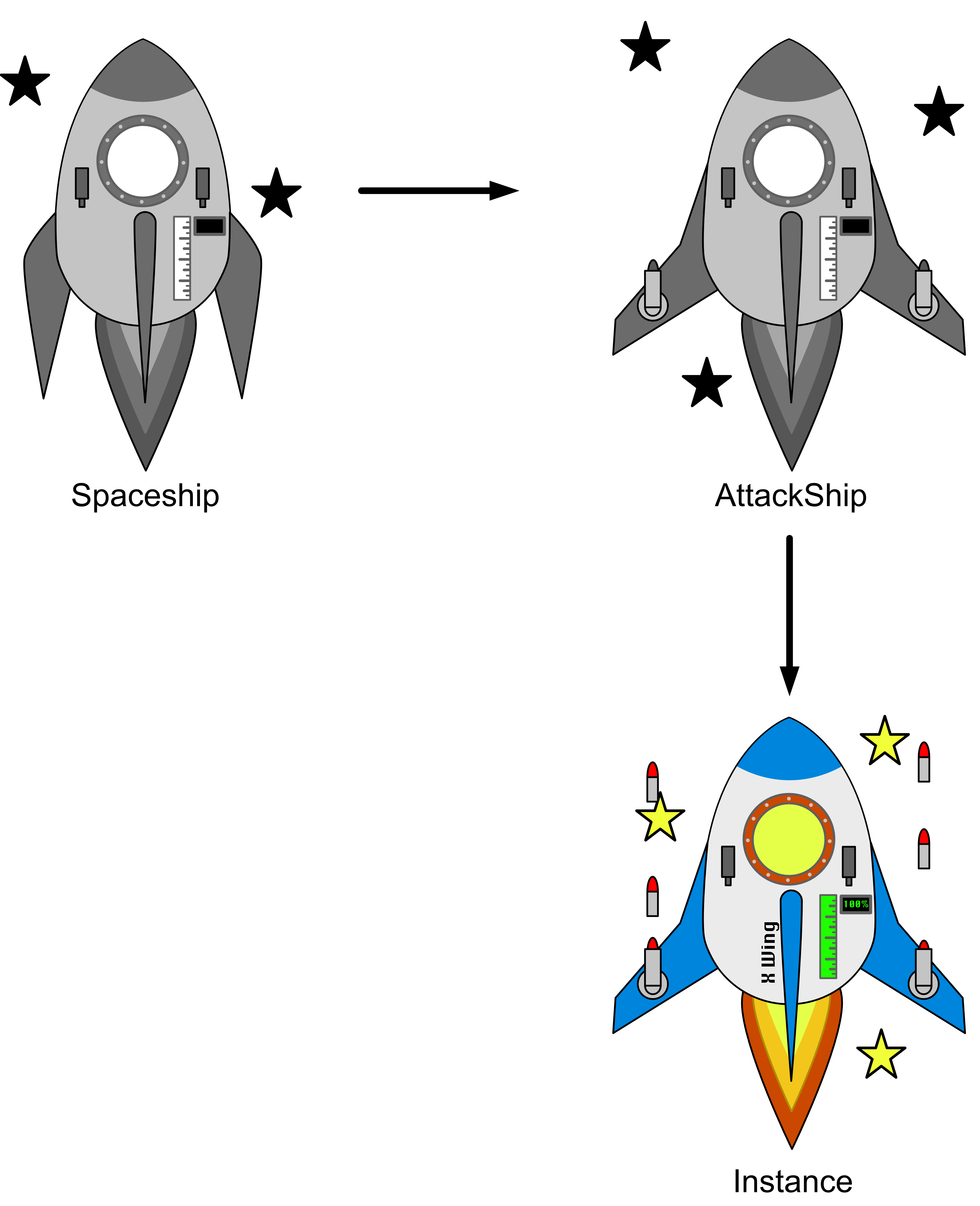
Modify your AttackShip class method so that:
a
roundsattribute used to track the number of rounds on board the ship, which is set in the constructora
fire_roundmethod which shoots off a single round if there is one available by decreasingroundsby1.
AttackShip Specifications
Inherit from the provided
SpaceshipclassAdditional attributes:
roundsthe number of rounds remaining on the ship
__init__method withParameters:
selfnamefuel_capacityrounds
Actions:
Call the
Spaceshipconstructor to set common attributes with the same nameSet the
roundsattribute
fire_roundmethod withParameters:
self
Actions:
Reduces the remaining
roundsby1.
Returns:
None(no return statement required)
Here is some code for you to start with:
class Spaceship:
    def __init__(self, name, fuel_capacity):
        self.name = name
        self.fuel_weight = 0
        self.fuel_capacity = fuel_capacity

    def refuel(self, weight):
        if self.fuel_weight + weight > self.fuel_capacity:
            self.fuel_weight = self.fuel_capacity
        else:
            self.fuel_weight += weight

    def fire_laser(self):
        if self.fuel_weight >= 10:
            self.fuel_weight -= 10


# ADD YOUR CLASS HERE


# X-Wings carry 6 torpedos
xwing = AttackShip("X Wing", 500, 6)
xwing.refuel(500)  # Fill 'er up!

xwing.fire_round()
print(xwing.rounds)
Solution
Solution is locked